Public Art Projects

New Hope Community Historical Survey

The New Hope Community Historical Survey documents the legacy of the New Hope Community, a historic African American community in northern Leon County, Florida, and its connection to New Hope Plantation. The project brings together archival research, oral histories, and site visits to tell a fuller, more inclusive story of the area.

The Historical Survey consists of three project components: 1) the New Hope Community Historical Narrative; 2) the New Hope Trailhead including an informational sign, and 3) this webpage dedicated to the New Hope Community on the Blueprint website that can be modified as new information is uncovered.

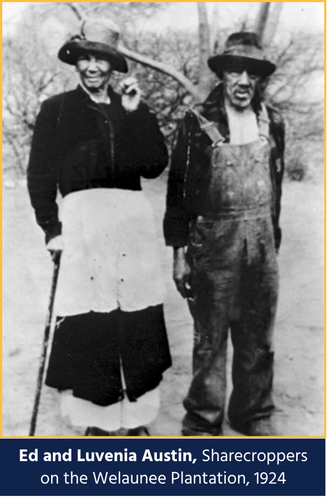
Today, the New Hope Community is located in the general area of Testerina Primitive Baptist Church, 5520 Miccosukee Road, Tallahassee, FL 32308. New Hope was established during the Reconstruction Era (1865–1877) by formerly enslaved people who became sharecroppers and tenant farmers. New Hope was not a legally incorporated town but was a settlement defined by shared labor, worship, education, and family ties.
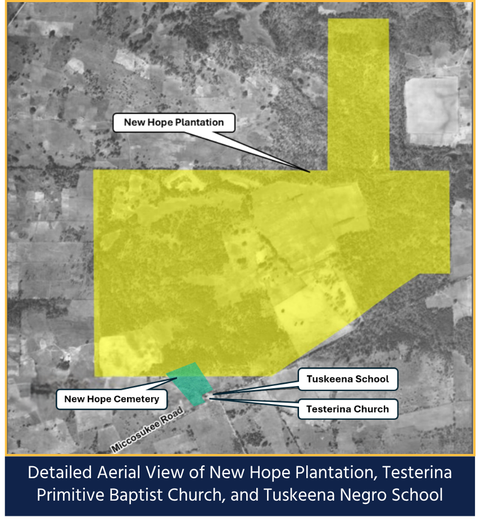
 

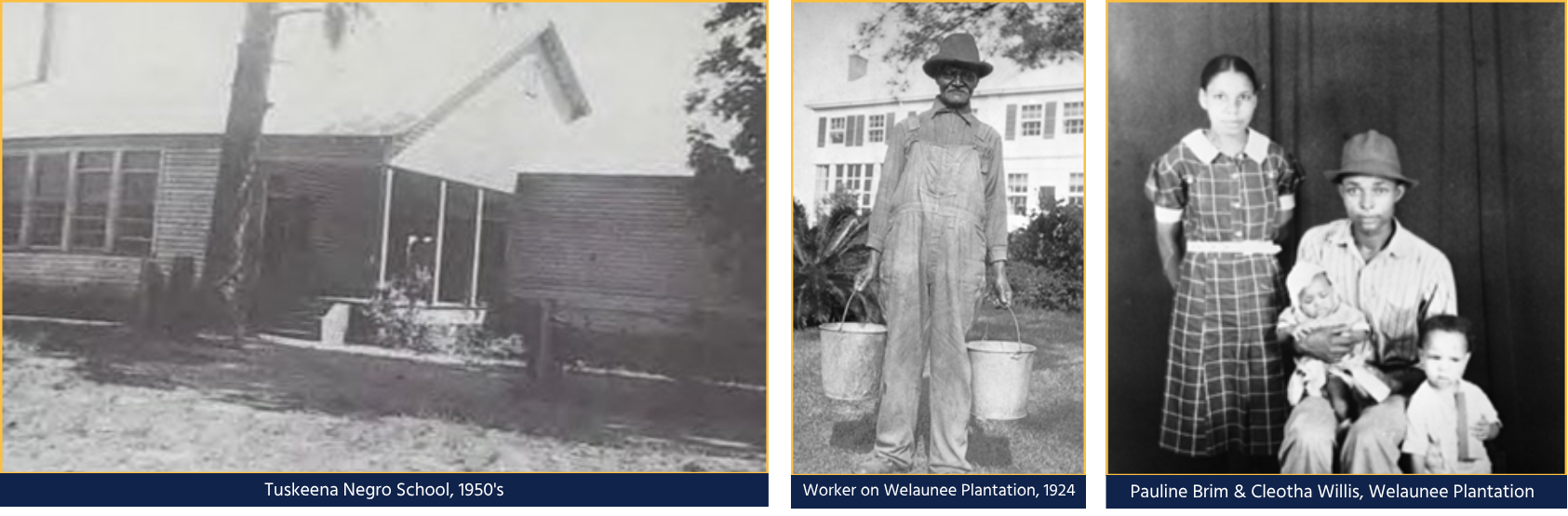
Three places serve as important pillars of the community: Testerina Primitive Baptist Church, Tuskeena Negro School, and the New Hope Cemetery. Testerina Primitive Baptist Church, founded in 1871, was a place where people gathered to worship and fellowship with each other. Tuskeena Negro School provided a formal education to the children of New Hope and other neighboring communities until its closing in 1951. The New Hope Cemetery was a burial place for community members from New Hope Plantation and surrounding plantations until its closure in 1948. Today, Testerina Primitive Baptist Church and the New Hope Cemetery remain and provide important connections to the history and legacy of the New Hope Community.

Historical Narrative

The New Hope Community Historical Narrative is a written report that explores the history and development of the New Hope Community and the broader Tallahassee-Leon County area. It examines the experiences of African American communities during the Reconstruction and post-Reconstruction eras and their contributions to the region.

The Historical Narrative illustrates an important chapter in Leon County’s African American history, highlighting the resilience, contributions, and lasting impact of the New Hope Community across generations.

This report is designed to be a living document. As additional information is uncovered through continued research and the discovery of historical records, new information will be added to the report in the form of appendices.

New Hope Trailhead

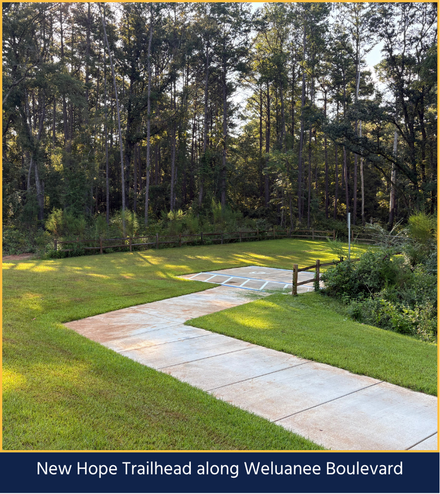
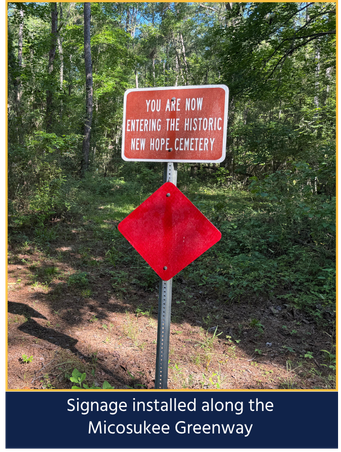
The New Hope Trailhead was incorporated into the Northeast Gateway: Welaunee Boulevard project, developed to provide convenient access to the New Hope Cemetery while also connecting to the Miccosukee Greenway Trail from Welaunee Boulevard.

The site features a split-rail wooden fence around the perimeter, sidewalk and driveway access from Welaunee Boulevard, and ADA-accessible parking. An informational sign is in development and will be installed at the New Hope Trailhead. The sign will inform trail users and people about the New Hope Community and will be installed before the end of 2026.

Preservation of the New Hope Cemetery

The New Hope Cemetery was documented in the Cultural Resource Assessment Survey (CRAS) conducted as part of the Project Development and Environmental (PD&E) Study for the Northeast Gateway: Welaunee Boulevard project in 2019.

Additional research and fieldwork, including cadaver dog surveys to identify potential burial locations, were conducted in 2020 and 2021 by the Bureau of Archaeological Research of the Florida Department of State’s Division of Historical Resources.

Based on these findings, the Florida Department of State’s Division of Historical Resources recommended preserving and protecting the New Hope Cemetery (LE6465). The recorded cemetery boundaries are drawn to include the largest area believed to contain human remains.

Genealogy Workshops

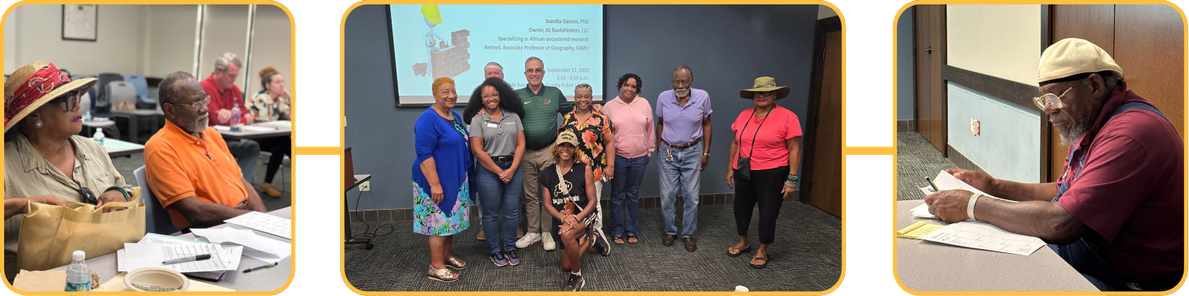
As part of gathering data for the Historical Narrative, Blueprint hosted two genealogy workshops for the New Hope descendants. The workshops were held at the Eastside Branch Library in August and September 2025 with Juanita Gaston from the Tallahassee African American Genealogical Society (TAAGS) leading the workshops.

During these sessions, participants were introduced to genealogy, learned how to begin researching their family history, and received worksheets and resource guides to assist with their research.

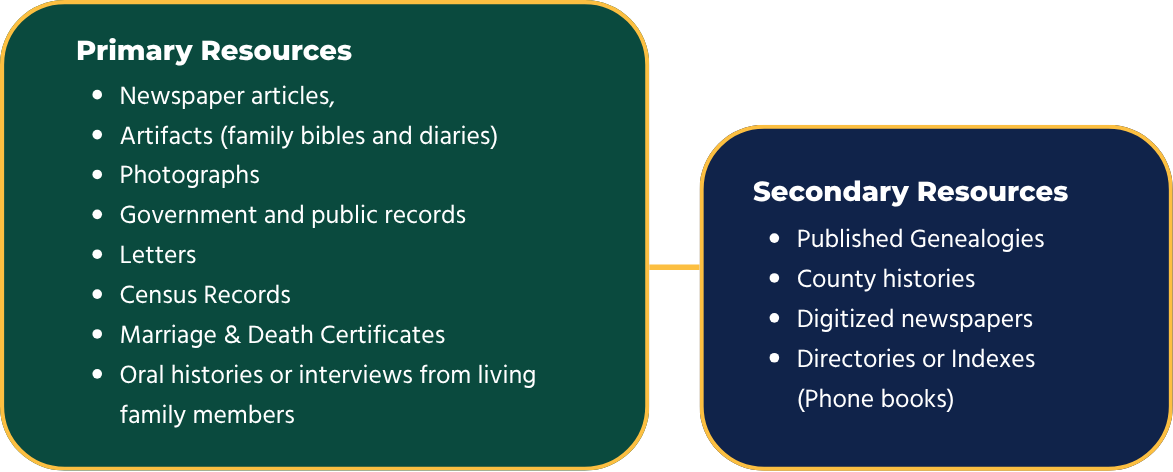
Genealogical research can be conducted both onsite and online through archives and repositories at the local, state, and national level. Resources include Florida Memory from the State Archives of Florida and US National Archives. Academic libraries and museums can also provide access to primary and secondary resources.

The New Hope Project’s research methods demonstrate how individuals can use similar strategies to conduct their own research, using historical records, oral histories, and other sources of information.

Primary sources are an important first step into researching past and present family members. These resources provide direct evidence of an event or person. Secondary resources interpret, analyze, or provide context for primary sources. These resources are created by researchers, historians, and others who were not directly involved in the events being documented.